Tindalls Concrete Restoration, LLC
Concrete Restoration & Repair
Concrete restoration and repair is the specialized work of diagnosing and fixing defects that compromise the aesthetics, safety, or structural integrity of concrete elements. Tindalls Concrete Restoration, LLC. focuses on restoring functionality and appearance while addressing root causes to minimize recurrence. Our services include crack repair, spall and delamination repair, joint restoration, concrete leveling, and concrete sealing.
Why concrete restoration matters
Concrete deterioration affects safety, property value, and usability. Left unaddressed, small problems can escalate—leading to more extensive repairs and higher costs. Effective restoration:
Re-establishes structural integrity by addressing reinforcement corrosion, voids, and delaminations.
Restores surface functionality and safety—eliminating trip hazards and reducing slip/fall risk.
Protects against further deterioration by sealing and treating the substrate against moisture and chemical ingress.
Preserves aesthetics—spot repairs, color matching, and coatings return surfaces to a uniform appearance.
Common causes of concrete damage
Freeze-thaw cycles leading to surface scaling in unprotected slabs.
Chemical attack from deicing salts or industrial chemicals.
Corrosion of embedded steel (rebar) causing cracking and spalling.
Alkali-silica reaction (ASR) creating map-like cracking patterns.
Settlement and poor subgrade compaction leading to differential movement.
Overloading and impact damage in industrial settings.
Our restoration and repair process
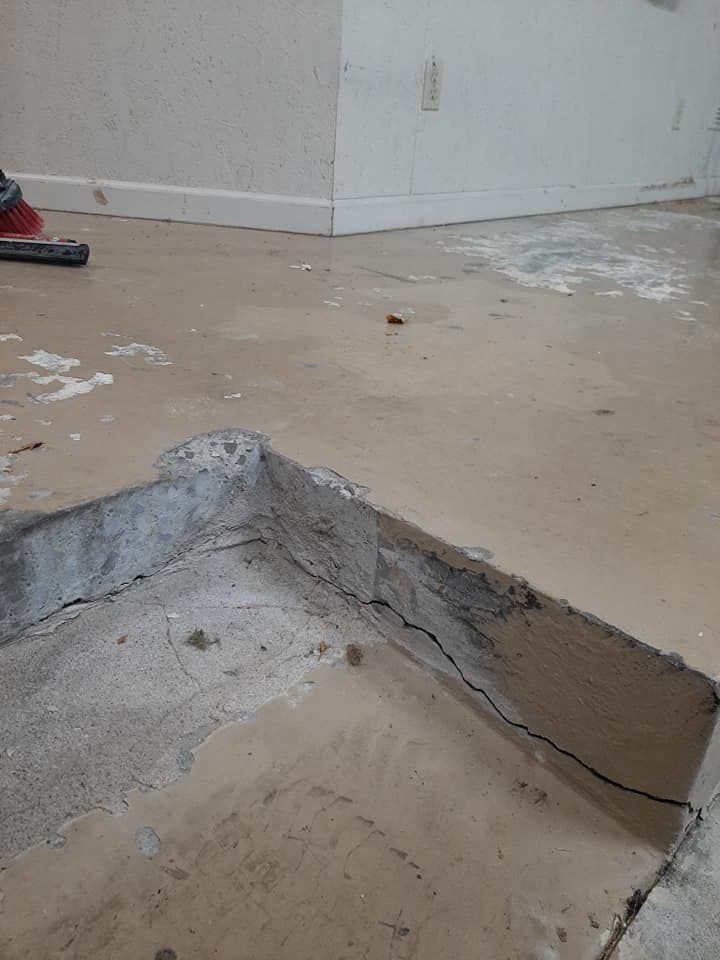
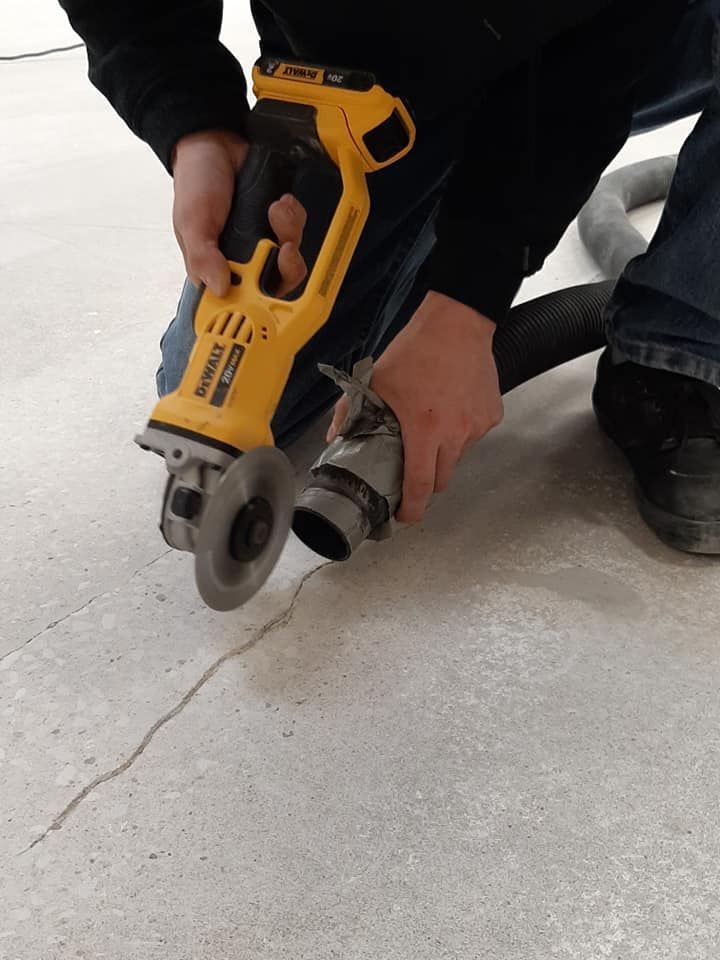
01
Diagnostic assessment
We identify visible defects, perform non-destructive testing where necessary, and evaluate reinforcement exposure and moisture conditions.
02
Cause analysis
Determining the root cause (e.g., water infiltration, corrosion, freeze-thaw, structural movement) is critical to preventing recurrence.
03
Repair plan
We present repair strategies—epoxy injection for structural cracks, patching with polymer-modified mortars, cathodic protection for severe corrosion, or full-depth replacement where necessary.
04
Surface prep
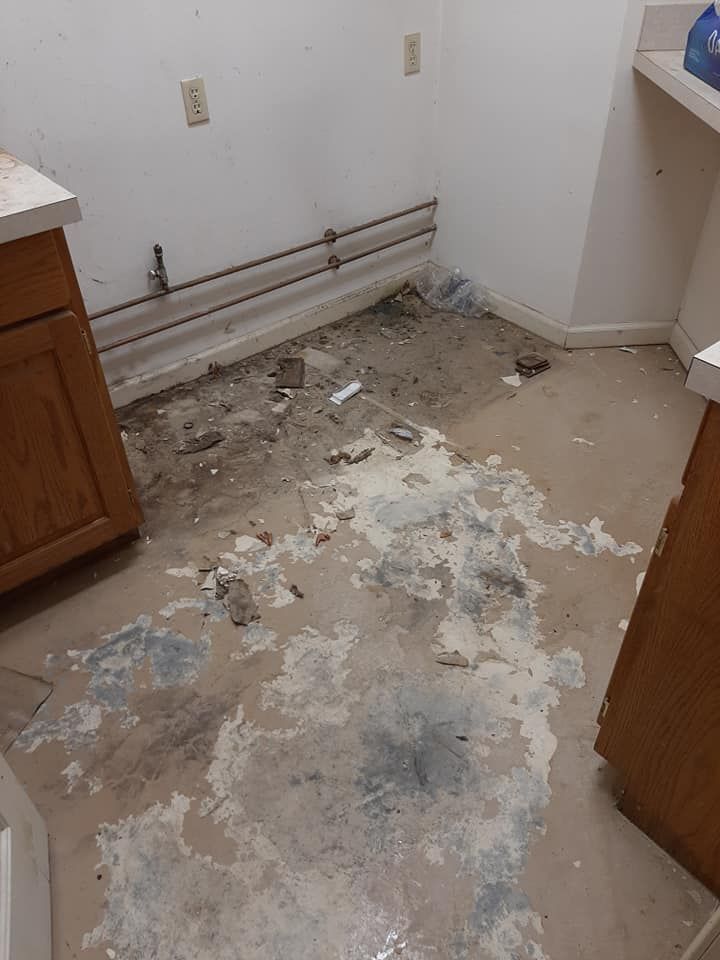
Successful repairs depend on clean, sound substrate—typically achieved through grinding, shot blasting, or hydrodemolition for larger areas.
05
Repair execution
We use appropriate repair materials such as silica fume-based mortars, polymer overlays, or specialty epoxies chosen for compatibility and performance.
06
Finishing and protection
Repairs are finished to match surrounding surfaces where possible and protected with sealers, coatings, or corrosion inhibitors.
07
Monitoring and maintenance
For complex structures, periodic monitoring and maintenance plans are recommended to detect early signs of deterioration.
Materials and technologies we use
- Epoxy and polymer injections for structural crack repair.
- Polymer-modified repair mortars for patching spalls and scaling.
- Corrosion inhibitors and protective coatings for embedded reinforcement.
- Polyurethane slab lifting systems for efficient leveling without major excavation.
- Moisture mitigation systems for high MVER slabs prior to coating or overlay.
Case studies and examples
- Warehouse slab with extensive joint deterioration: We removed failed joint filler, repaired spall areas with polymer mortars, and installed a durable joint system to withstand forklift traffic.
- Exterior parking area with freeze-thaw scaling: We performed spot repairs, applied a surface treatment, and recommended sealing and improved drainage to reduce repeated damage.
- Historic building restoration: Our team repaired delaminated floors, matched finishes, and applied protective treatments that preserved character while enhancing durability.
Specific repair services we offer
Crack repair
Epoxy injection for structural cracks; flexible sealants for non-structural movement joints.
Spall repair
Removal of loose material, cleaning of exposed rebar, application of corrosion protection, and repair with polymer-modified repair mortars.
Joint restoration
Replacing failed joint material, installing new joint fillers, and ensuring proper joint function.
Concrete leveling
Polyurethane slab lifting or mudjacking to correct uneven slabs and restore surface drainage.
Surface restoration
Removing delaminated surface toppings and applying overlays or thin toppings to restore uniform appearance.
Reinforcement protection
Applying corrosion inhibitors or coatings to exposed reinforcement to slow future deterioration.
Preventative measures and maintenance
Apply breathable sealers to reduce water penetration and freeze-thaw damage.
Manage drainage to prevent standing water near edges and on slabs.
Address cracks early—small crack repairs are less costly and preserve structural integrity.
Regular inspection schedules to detect and treat minor defects before they expand.
Safety and code compliance
We comply with local building codes and ADA requirements where applicable. Safety during repairs includes traffic control, barrier systems, and proper ventilation when using repair materials with VOCs or strong odors.
Frequently asked questions (FAQs)
How long will concrete repairs last?
Durability depends on correct diagnosis and execution. Properly installed repairs with compatible materials and addressing root causes can last for many years. Ongoing maintenance and addressing environmental stressors will extend life.
Can you fix a slab that has settled unevenly?
Yes. Polyurethane slab lifting and mudjacking are proven methods to restore level surfaces without full replacement. We assess the cause of settlement and choose the most effective method.
Do you match existing surface color when repairing spalls?
We strive to match colors and textures using compatible materials and trowel finishes. Exact matches can be challenging due to age and weathering of original concrete, but we aim for the best visual integration.
How to request a repair assessment
GET IN TOUCH
- Call (618) 303-3343 to schedule a site visit and initial assessment.
- We will inspect, provide diagnosis, and recommend remediation steps with cost estimates and timelines.
- Once approved, we schedule work with attention to site access and operational impact.
Tindalls Concrete Restoration, LLC.