Tindalls Concrete Restoration, LLC
Concrete Installation
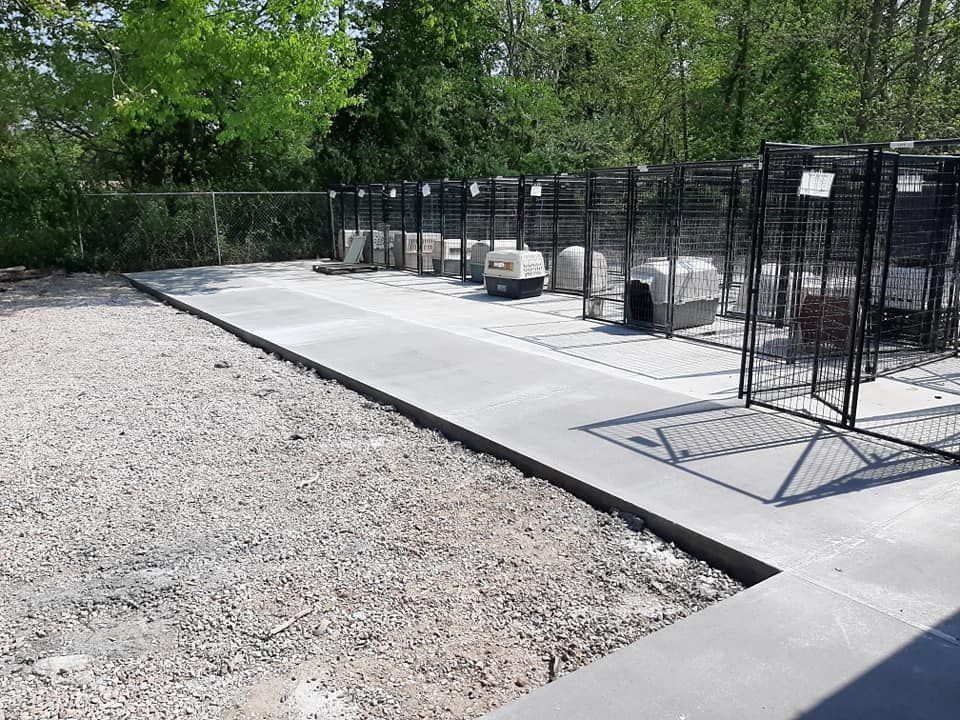
Concrete forms the structural backbone of many building projects—foundations, floors, sidewalks, curbs, driveways, and industrial pads. Professional concrete installation ensures proper load distribution, durability, and aesthetics. At Tindalls Concrete Restoration, LLC., our concrete installation services combine attention to subgrade preparation, appropriate reinforcement, precise mix designs, skilled finishing, and structured curing practices to create slabs that perform and last.
Why concrete installation matters
A correctly installed concrete element resists cracking, settlement, heaving, and premature deterioration. Poor installation leads to costly issues such as uneven floors, trip hazards, cracked sidewalks, and compromised structural performance. Factors that determine the success of a concrete installation include:
Proper subgrade compaction to prevent settlement.
A mix design matched to exposure conditions, load requirements, and finish needs.
Correct placement and spacing of reinforcement (rebar or wire mesh) to control cracks and distribute loads.
Strategic joint layout—control joints, expansion joints, and isolation joints—to guide crack locations and protect structural interfaces.
Appropriate finishing and curing procedures to achieve designed strength and durability.
Key benefits of expert concrete installation
Long-term durability: Correct materials and placement extend life and reduce maintenance.
Reduced risk of structural problems: Proper reinforcement and subgrade preparation help prevent premature cracking or failure.
Safety and compliance: Well-installed sidewalks, ramps, and floors meet ADA and local standards.
Cost savings: Doing it right the first time reduces repair/replace cycles.
Enhanced aesthetics: Finishes—from broomed textures to exposed aggregates and stamped patterns—add curb appeal and functionality.
Our concrete installation services
01
New slab construction
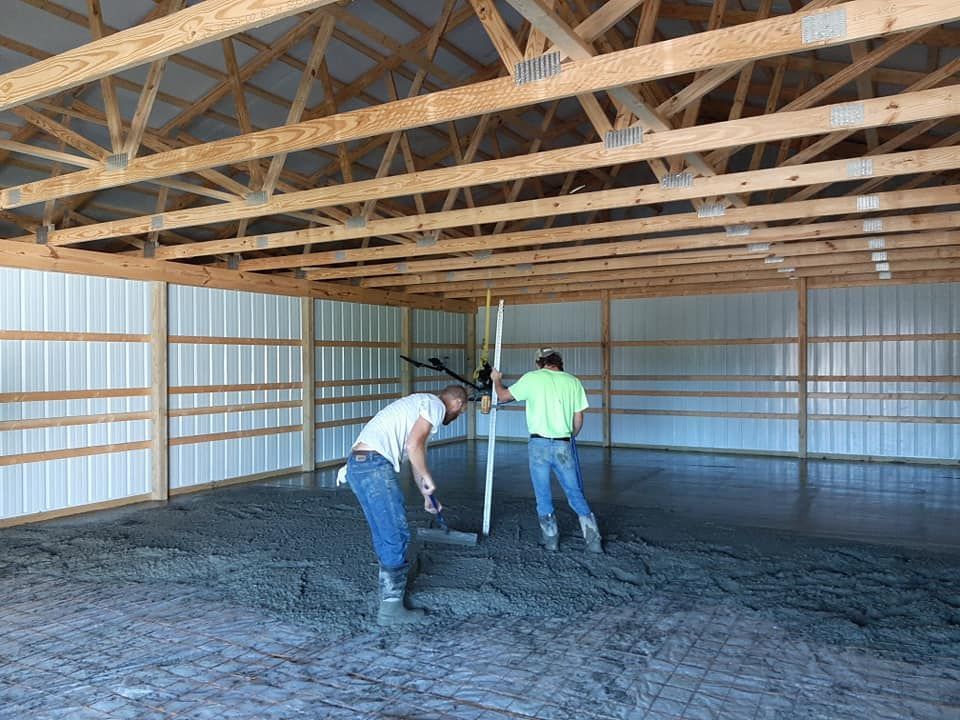
We build interior and exterior slabs for garages, basements, warehouses, and industrial pads. We evaluate load requirements and choose mix designs and reinforcing strategies accordingly.
02
Sidewalks, curbs, and ramps
Our team installs pedestrian surfaces with correct slope, surface texture for slip resistance, and access considerations to meet ADA compliance.
03
Driveways and patios
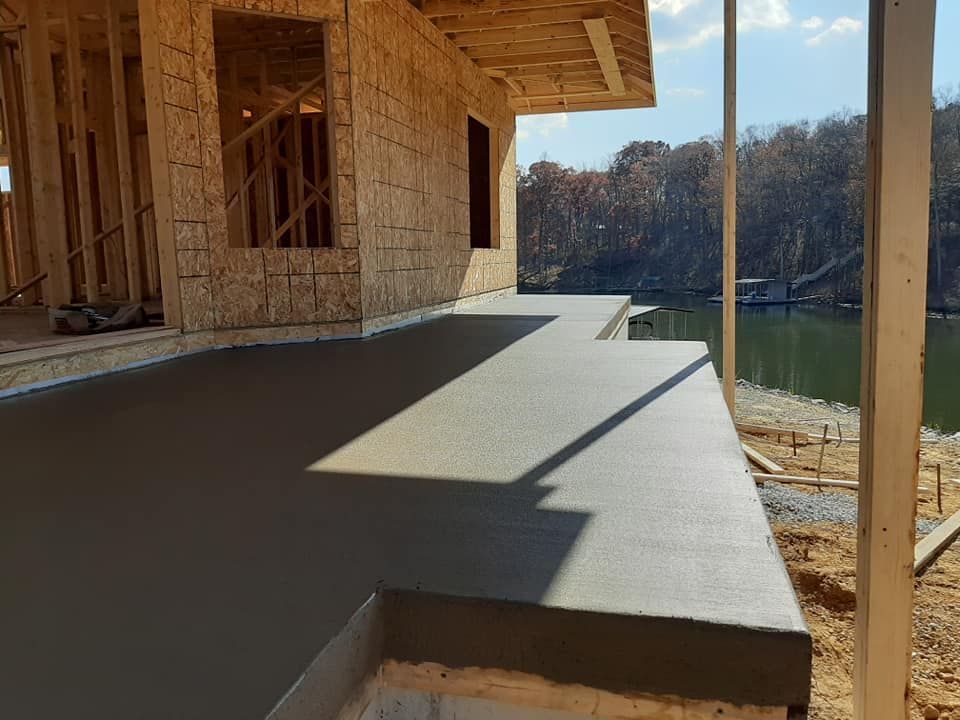
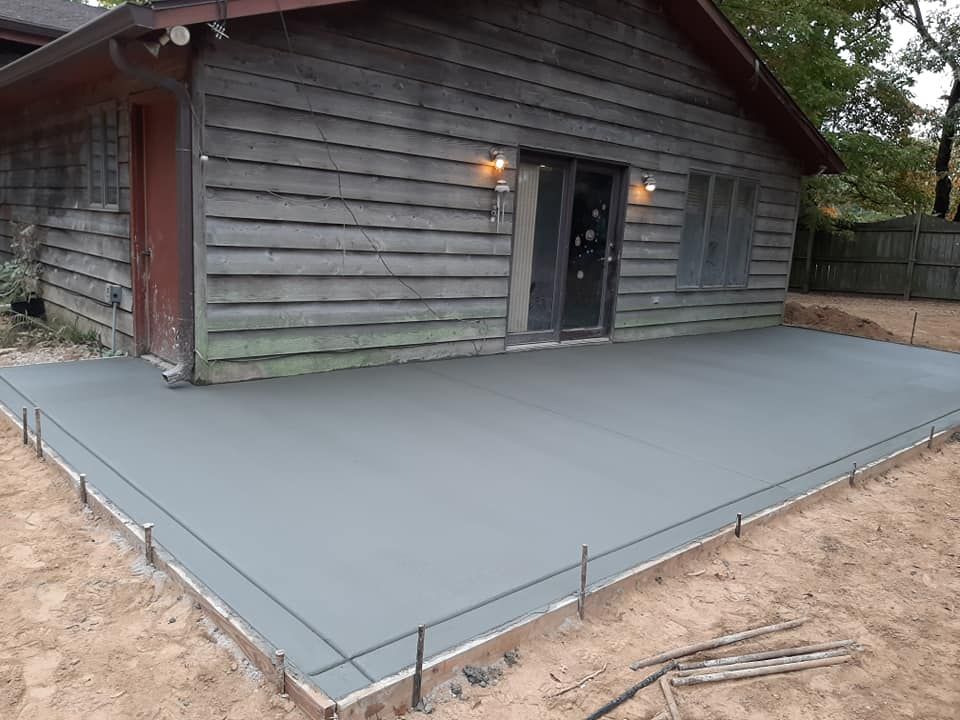
We offer design and installation options that include broom finishes, stamped patterns, stained concrete, and saw-cut control joints.
04
Footings and foundations
We provide footing and foundation work including trench excavation, concrete placement, and coordination with structural engineering when required.
05
Reinforcement and joint layout
Properly designed reinforcement and joint placement are critical for controlling cracking and accommodating thermal movement. We plan joint spacing and include expansion and isolation joints as needed.
06
Slab-on-grade and elevated slabs
Each substrate type has unique requirements—drainage, vapor barriers, or elevated structural support—and our team designs the correct approach.
Pre-installation assessment and site preparation
A successful installation begins with thorough site work:
- Grading and compaction of the subgrade to prevent future settlement.
- Installation of sub-base material (crushed stone) to ensure uniform bearing and drainage.
- Placement of vapor barriers or insulating layers for slabs that require moisture control.
- Layout for formwork, reinforcement, and control joint placement.
- Coordination with utilities and other trades to avoid conflicts during pour.
Concrete mix design and material selection
We select mixes that match the project conditions:
- Compressive strength requirements (e.g., 3,000–4,500 psi for different applications).
- Admixtures for workability, set control, and freeze-thaw resistance.
- Air entrainment for exterior exposures subject to cyclic freezing and thawing.
- Aggregate selection to minimize shrinkage and improve durability.
Placement, finishing, and curing
- Proper placing methods (pump, chute, or wheelbarrow) ensure a uniform slab with controlled consolidation.
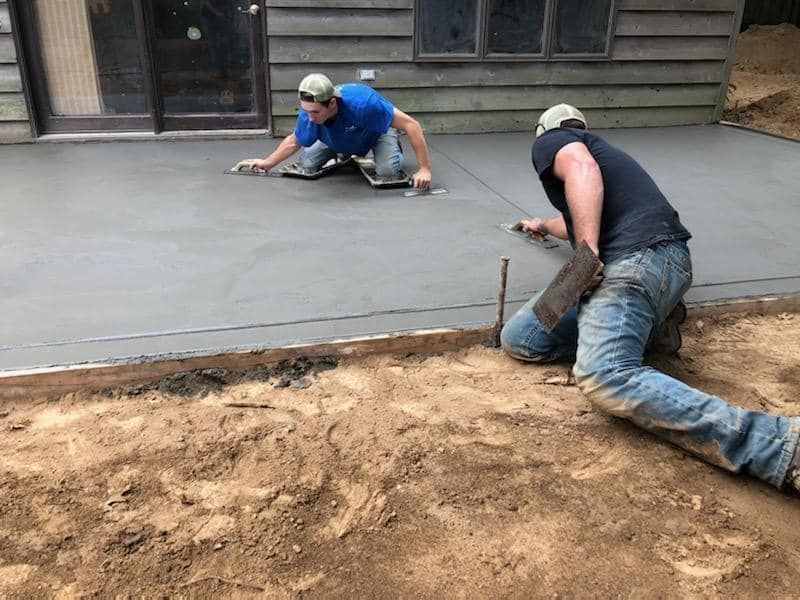
- Finishing—float, trowel, broom, or textured—adds the desired surface performance and appearance.
- Curing is critical: Protect the slab from premature drying with curing compounds, wet coverings, or other manufacturer-recommended methods to achieve designed strength and durability.
Quality control and testing
We implement on-site controls:
- Slump tests and air content verification for fresh concrete.
- Curing monitoring and field observations to ensure proper set conditions.
- Concrete cylinder or cube testing where required by project specifications for compressive strength verification.
Common installation challenges and our approach
Settlement and soft subgrades
We address soft soils through additional compaction, sub-base replacement, or soil stabilization techniques.
Speed vs. quality pressures
We prioritize quality and orchestrate pours to avoid shortcuts that compromise long-term performance.
Cold-weather placements
We apply warm-water mixes, insulating blankets, and set accelerators per best practices to prevent freezing and ensure adequate cure.
Hot-weather placements
We schedule pours during cooler parts of the day, use retarding admixtures, and manage evaporation to reduce plastic shrinkage cracking.
Finishes and aesthetic options
Broom finish: Economical and slip-resistant—ideal for exterior walkways and driveways.
Exposed aggregate: Reveals decorative stone for a textured, durable surface.
Stamped concrete: Imprints patterns that mimic pavers or stone—great for patios and driveways.
Stained and dyed concrete: Adds color and character to slabs with a permanent finish option.
Polished concrete: Mechanically polished to a sheen—often used in commercial and retail interiors.
Maintenance and longevity
Maintenance for installed concrete includes:
Sealing to protect from stains, de-icing salts, and water penetration.
Joint maintenance to prevent water infiltration and subgrade washout.
Regular cleaning to remove contaminants and reduce surface wear.
Periodic inspection for early repair of small cracks or spalls.
Case studies and project examples
3,000 sq ft warehouse slab installation with 4,000 psi mix, fiber reinforcement, and control joint layout for heavy forklift traffic.
Residential driveway with exposed aggregate finish and edge insulation to reduce frost heave.
Municipal sidewalk replacement with ADA-compliant ramp and detectable warning surfaces.
Frequently asked questions (FAQs)
How long before a new concrete slab can be used?
Light foot traffic is typically safe after 24–48 hours. Vehicle traffic often requires 7 days for initial strength, but full design strength commonly takes 28 days. We provide specific guidance based on the mix and expected loads.
How do I prevent cracking?
While some cracking is natural due to shrinkage and thermal movement, correct subgrade preparation, adequate reinforcement, proper jointing, controlled finishing, and curing significantly reduce random cracking.
Do you install radiant heating in slabs?
We can coordinate with mechanical contractors to incorporate tubing or conduits into slab pours upon project planning and design coordination.
How to get started
GET IN TOUCH
- Contact us at (618) 303-3343
- We’ll schedule a site visit to evaluate subgrade, drainage, access, and any special requirements.
- Receive a written estimate outlining scope, materials, timeline, and warranty.
Tindalls Concrete Restoration, LLC.