Tindalls Concrete Restoration, LLC
Concrete Polishing & Grinding
Concrete polishing and grinding transform ordinary slabs into durable, low-maintenance, and visually appealing surfaces ideal for retail, industrial, commercial, and residential spaces. This mechanical process uses diamond tooling to progressively remove surface material, refine the slab, and create a controlled, attractive sheen. At Tindalls Concrete Restoration, LLC., our concrete polishing services are designed to improve durability, reduce dusting, and provide a customizable finish that aligns with your operational and aesthetic goals.
Why polished concrete matters
Polished concrete offers a combination of benefits that make it a smart choice for many applications:
Durability and longevity: Polished concrete resists abrasion and traffic with minimal maintenance.
Low lifecycle cost: Requires less frequent maintenance compared to coatings and reduces dust-related maintenance tasks.
Improved indoor air quality: Polished concrete reduces dust and particulates in the air by sealing the substrate.
Reflectivity: High-gloss polish improves lighting efficiency by reflecting ambient light, potentially reducing lighting energy costs.
Versatility: Polishes can be adapted from matte to high-gloss, and densifiers and topical treatments can enhance stain resistance.
Key benefits of professional polishing and grinding
Controlled removal: Precise grinding removes surface contaminants, laitance, and weak surface material to reveal strong concrete beneath.
Improved surface integrity: Densifiers chemically react with the concrete to harden and reduce abrasion.
Safety and compliance: Well-installed sidewalks, ramps, and floors meet ADA and local standards.
Custom finish options: Different grit progressions achieve variable sheen levels to meet design intent.
Compatibility with overlays and coatings: Properly polished and prepared slabs serve as excellent substrates for decorative overlays or epoxy systems.
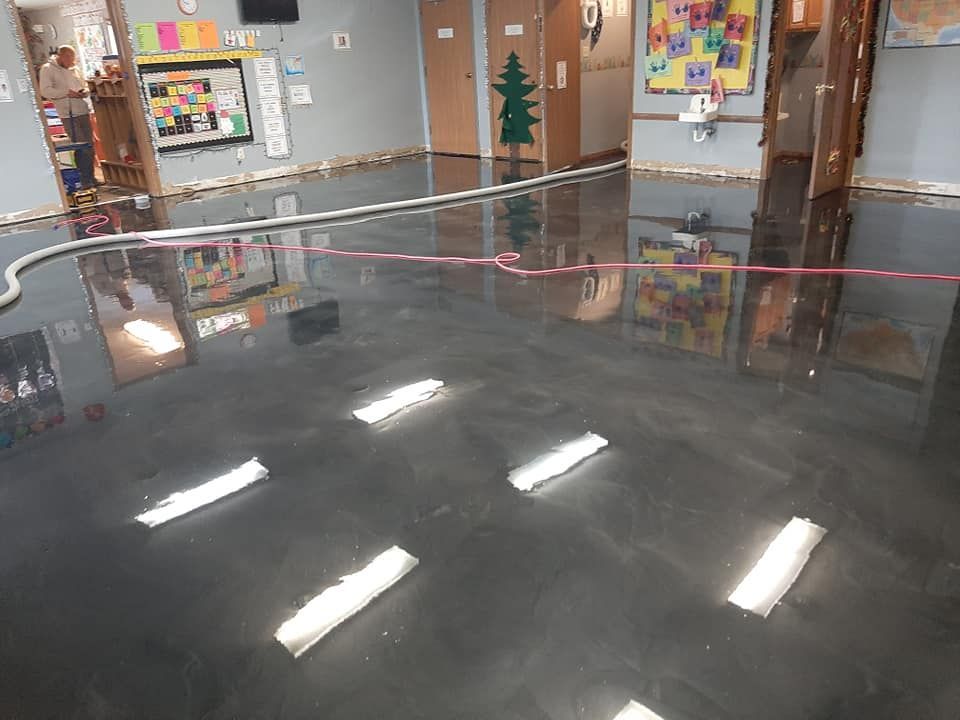
Our polishing and grinding process
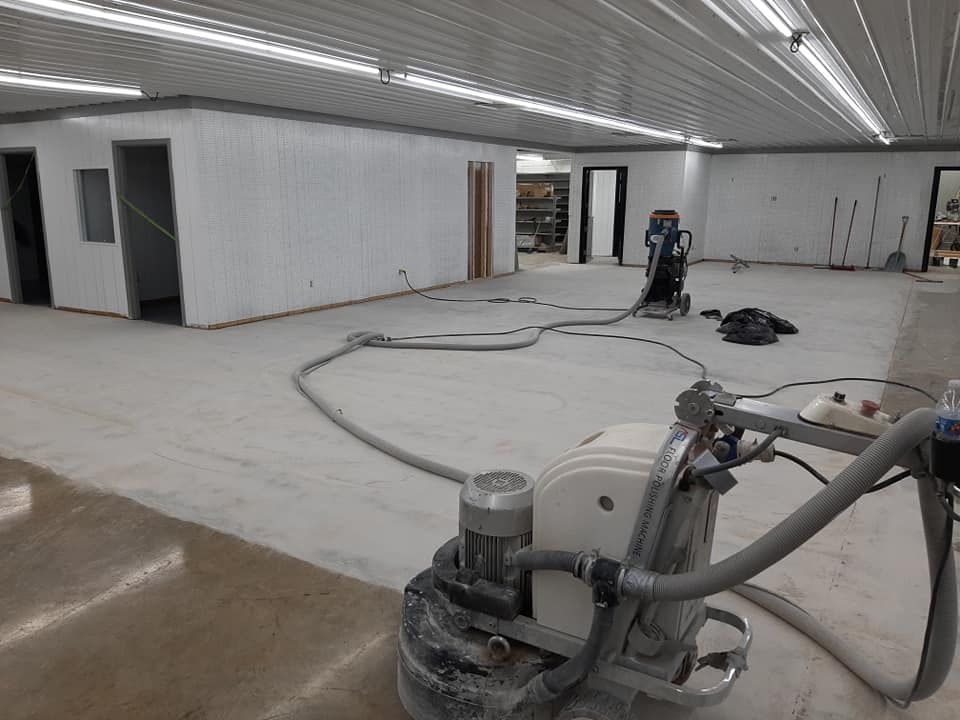
01
Inspection and testing
We inspect slab condition, determine moisture content (MVER or RH testing when necessary), and identify areas requiring repair.
02
Surface remediation
Cracks, spalls, or delamination are repaired using polymer-modified mortars or epoxy injections before polishing begins.
03
Grinding
Using a series of diamond abrasives, we grind the surface to remove contaminants, thin coatings, and to achieve uniform texture. Initial coarse grits remove excess material; progressively finer grits refine the surface.
04
Densification
We apply a silicate densifier to harden the concrete and reduce porosity. Densifier chemistry helps achieve higher gloss levels and increases longevity.
05
Polishing
The surface is polished with finer diamond pads to achieve the desired sheen (matte, satin, semi-gloss, or high-gloss).
06
Optional stain or dye
Pigments and stains can be integrated before final polishing for colored or variegated effects.
07
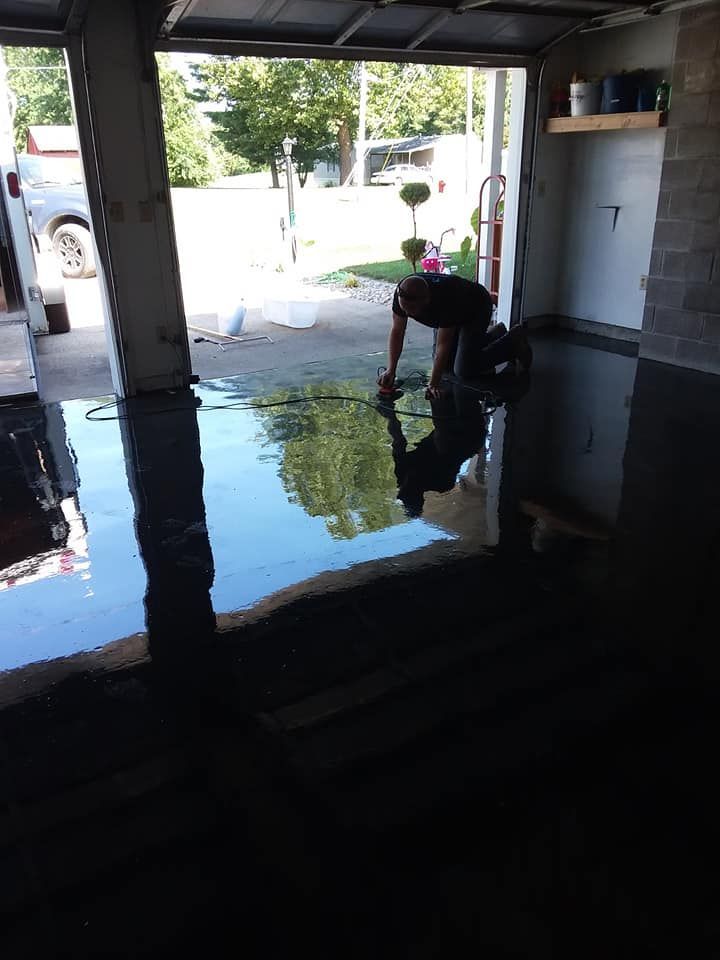
Topical sealer or topical finishes
For added protection, especially in chemical-prone environments, we can apply breathable sealers, topical urethanes, or stain-resistant treatments.
08
Final inspection and maintenance instructions
We provide cleaning regimens and maintenance plans tailored to your use-case.
Types of polished concrete finishes
- Mechanical grind and polish: Traditional polishing that creates a dense, hard surface without topical coatings.
- Densified polished concrete: Incorporates a chemical densifier to enhance hardness and shine.
- Stain and polish: Adds color through acid or water-based stains, followed by polishing for a finished look.
- Integral or pigmented polish: Uses pigmented overlays or dyes to provide uniform color before polishing.
- Hybrid systems: Combine polishing with a final topical sealer or urethane for environments requiring chemical resistance.
Where polished concrete works best
- Warehouses and distribution centers seeking durable, dust-free floors.
- Retail stores and showrooms desiring a clean, reflective, high-end appearance.
- Office lobbies and common areas where design and maintenance are both important.
- Residential basements and garage floors for an attractive, low-maintenance solution.
- Educational and healthcare facilities where hygiene and durability are priorities.
Preparation and considerations
Moisture mitigation
High moisture vapor emission can interfere with densifier penetration and long-term adhesion of topcoats. We perform moisture testing and apply mitigation systems when required.
Slab condition
Severe spalls, large cracks, or poorly performing toppings must be repaired before polishing.
Joint and crack management
Expansion joints and control joints remain visible, and their treatment must be considered in design and maintenance.
Stains and contaminations
Oil, grease, or chemical stains may require extra grinding or specialized cleaning.
Advantages vs. alternative floor finishes
Compared to epoxy: Polished concrete is often lower-maintenance and more durable under forklift traffic; epoxy can provide superior chemical resistance where required.
Compared to tile or carpet: Polished concrete is seamless, easier to maintain, and less prone to harboring dirt and allergens.
Compared to overlays: Polishing uses the existing slab as the finish, which can be cost-effective when the slab is in good condition.
Maintenance and care
Polished concrete is low-maintenance but benefits from regular care:
Routine sweeping and mopping with neutral pH cleaners.
Periodic burnishing to restore sheen in high-traffic areas.
Prompt removal of abrasive debris to reduce micro-scratches.
Re-application of topical sealers where applied as needed based on manufacturer recommendations.
Case studies and project examples
20,000 sq ft distribution center polished to a satin sheen to reduce dusting and improve forklift operation visibility.
Retail boutique polished to a high gloss with integrated dye for a showroom aesthetic.
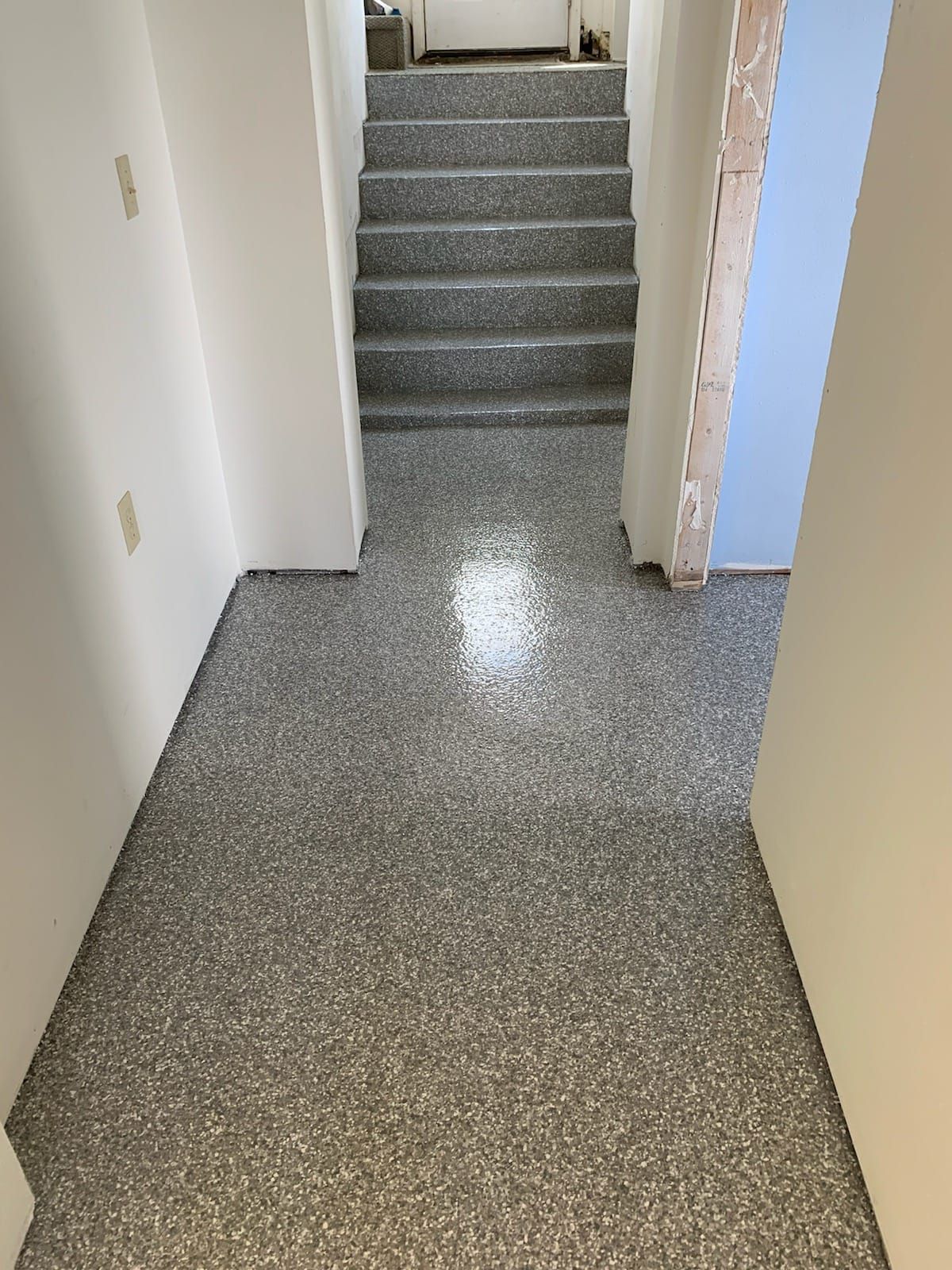
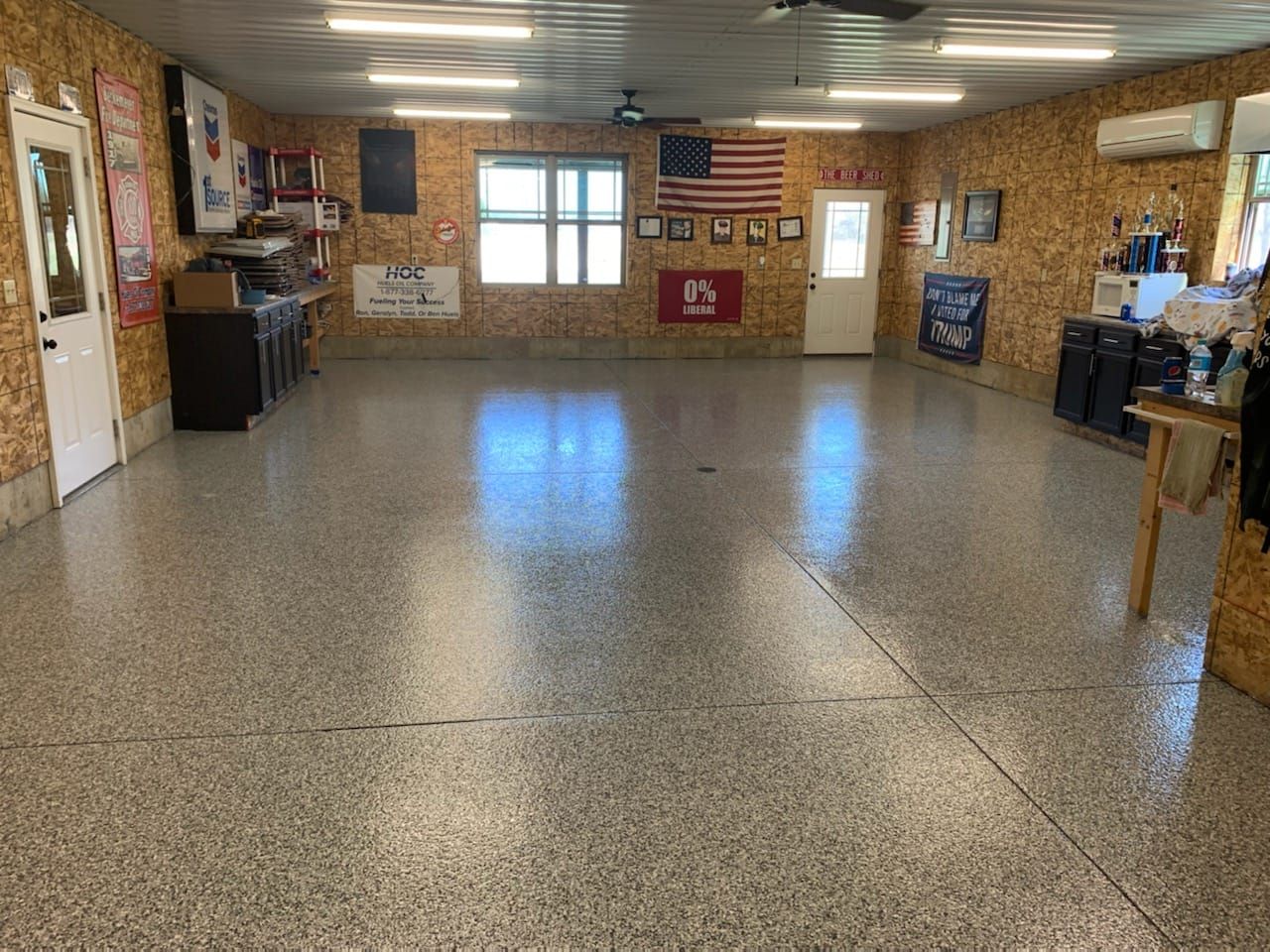
Residential garage transformed from oil-stained floor to a polished, sealed surface that resists staining and is easy to clean.
Frequently asked questions (FAQs)
Can you polish an old, worn concrete floor?
In many cases, yes. We evaluate slab thickness, contaminations, and structural defects. Surfaces with heavy toppings or compromised concrete may require removal or overlay prior to polishing.
Will polishing make the floor slippery?
Polished concrete can be finished with a specified slip resistance. We balance sheen with surface texture and can apply anti-slip treatments or specify satin finishes for safety-critical areas.
How long does polishing last?
With proper maintenance, polished concrete can last for many years. The densifier and polish process physically alters the concrete, creating a durable surface resistant to wear. In very high-traffic or chemical-exposure areas, maintenance or re-application of topical finishes may be advisable.
How to proceed with a polishing project
GET IN TOUCH
- Contact us for a site visit: (618) 303-3343.
- We perform moisture testing and slab assessment.
- Receive a proposal with finish options, timeline, and maintenance recommendations.
- Schedule the work to minimize disruption and maximize efficiency.
Tindalls Concrete Restoration, LLC.